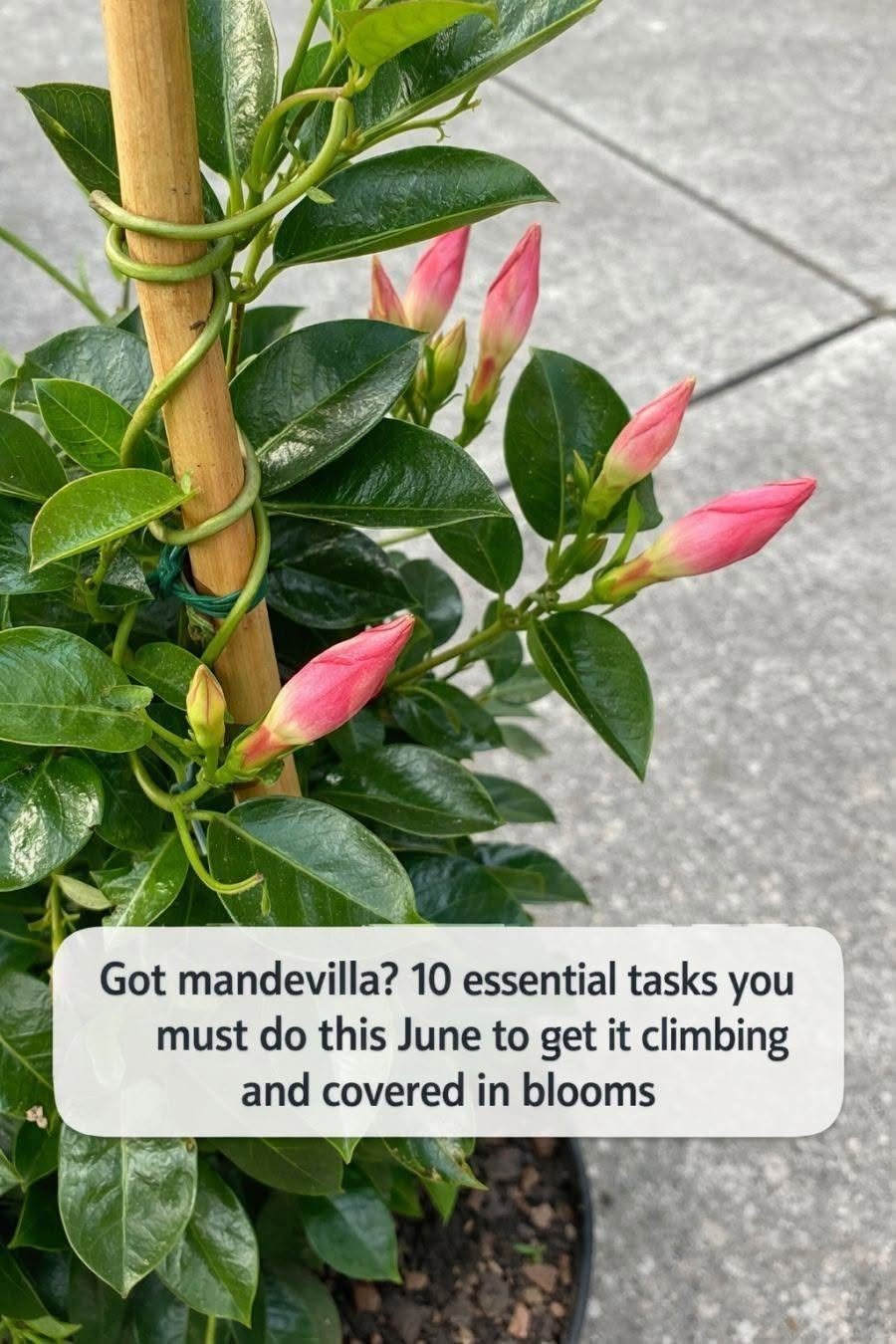
Mandevillas, with their vibrant blooms and climbing vines, can transform any garden space into a tropical paradise. As June rolls in, it’s the perfect time to give your mandevilla the attention it deserves to ensure a summer full of abundant blossoms. Whether you’re nurturing a young plant or caring for a well-established climber, a few essential tasks can make the difference between a thriving mandevilla and one that merely survives.
This guide outlines 10 critical tasks you should undertake this June to help your mandevilla flourish. From checking the health of your plant to ensuring it has the right support structure to climb, these steps will set the foundation for a season of growth and beauty. Let’s dig into the details of what you can do to keep your mandevilla climbing and covered in blooms.
1. Give Your Mandevilla a June Health Check
Start by assessing the overall health of your mandevilla. Check for any signs of disease, pests, or damage on the leaves and stems. Look for yellowing leaves, which may indicate nutrient deficiency or overwatering. Inspect the undersides of the leaves for any pests like aphids or mites.
Ensure the plant has a strong central stem and healthy green foliage. If you notice any signs of distress, such as wilting or discoloration, identify the issue promptly so you can take corrective action. A thorough health check will help you catch problems early and ensure your plant is off to a strong start this growing season.
2. Repot or Refresh Soil So Roots Can Power Growth
If your mandevilla has been in the same pot for over a year, it may be time to repot it. Choose a pot that is 2-4 inches larger in diameter than the current one to give the roots room to grow. Use a well-draining potting mix rich in organic matter.
If repotting isn’t necessary, consider refreshing the top layer of soil. Remove the top 2-3 inches of old soil and replace it with fresh potting mix. This will provide new nutrients and will improve drainage, which is crucial for healthy root development.
3. Feed With the Right Fertilizer for Nonstop Blooms
Mandevillas are heavy feeders and require a balanced fertilizer to support their growth and flowering. Use a water-soluble fertilizer with an N-P-K ratio of 10-20-10 every two weeks during the growing season. This ratio supports healthy foliage (nitrogen), abundant blooms (phosphorus), and strong roots (potassium).
Be careful not to over-fertilize, as this can lead to salt build-up in the soil, which can harm the plant. Always follow the instructions on the fertilizer package and water the plant well after feeding to help the nutrients reach the root zone.
4. Install a Strong Trellis and Gently Train the Vines
A sturdy trellis is essential for supporting your mandevilla as it climbs. Choose a trellis made of materials like metal or wood that can withstand the weight of the plant and exposure to the elements. Position the trellis securely in your garden or pot before training the vines.
Gently tie the vines to the trellis using soft garden ties, ensuring not to constrict the stems as they grow. As the plant grows, continue to guide new growth onto the trellis to encourage upward and outward spread, creating a lush, full display.
5. Prune and Pinch for Bushier, Flower-Loaded Stems
Pruning is essential for encouraging bushier growth and more blooms. In June, focus on pinching back the tips of new growth to promote lateral branching. Use clean, sharp pruning shears to remove dead or damaged stems and leaves.
Pruning will help direct the plant’s energy towards producing more flowers. Regularly removing spent blooms can also encourage new buds to form, keeping your mandevilla flowering throughout the summer.
For Complete Cooking STEPS Please Head On Over To Next Page Or Open button (>) and don’t forget to SHARE with your Facebook friends
For Complete Cooking STEPS Please Head On Over To Next Page Or Open button (>)